Excursions and Day Trips
The city of Oaxaca is extraordinary, but the state that surrounds it is equally remarkable. Within an hour or two of the centre you will find ancient ruins that predate the Roman Empire, petrified waterfalls, artisan villages producing handwoven textiles and black clay pottery, and artisanal products produced by methods haven't changed in centuries. We encourage you to spend at least one full day exploring beyond the city, it will stay with you.

Hierve el Agua
- The Petrified Waterfalls
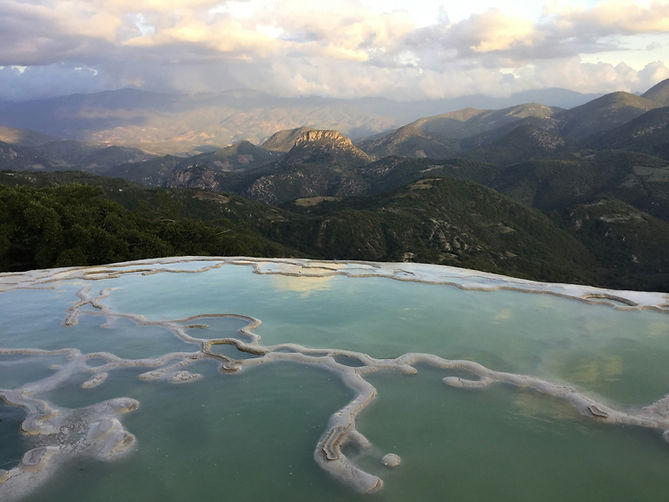
Seventy kilometres east of Oaxaca City, perched on a clifftop above the Sierra Madre mountains, sits one of the most extraordinary natural formations in Mexico - and one of only two of its kind in the world. Hierve el Agua - which translates as "the water boils" - takes its name from the natural springs that bubble up from the ground, their mineral-rich water having trickled over the cliff face for thousands of years and slowly petrified into formations that look, from a distance, exactly like a frozen waterfall cascading into the valley below.
There are two petrified waterfalls - the Cascada Grande, rising nine storeys at 98 feet, and the smaller Cascada Chica at 39 feet - both viewable from walking trails that loop around the site, offering vertiginous perspectives of the formations from both above and below. At the top, natural mineral pools sit perched at the edge of the cliff, forming a natural infinity pool looking out over the Sierra Madre mountains - one of the most striking views in the state of Oaxaca. You can swim in them. The water, despite the name, is cool and refreshing rather than hot.
Wear sturdy shoes, bring plenty of water and sunscreen, and allow at least three to four hours on site to do the walking trail and spend time at the pools. There are food stalls at the entrance serving local food and drinks.
Hierve el Agua is most easily combined with a full day in the Eastern Valleys - adding stops at the Zapotec ruins of Mitla, the weaving village of Teotitlán del Valle, and the extraordinary Tule tree, said to be the widest tree in the world. It makes for one of the most complete and memorable days you can spend outside the city.
EL ÁRBOL DEL TULE
On the road east out of Oaxaca, about fifteen minutes from the city centre, the village of Santa María del Tule is home to something that stops you in your tracks. The Tule Tree is considered the widest tree in the world - a Montezuma cypress with a trunk circumference of over 58 metres, estimated to be between 1,500 and 3,000 years old. Standing in front of it, the scale is difficult to process. It dwarfs everything around it - the church beside it, the people beneath it, your sense of what a tree is supposed to look like. It takes only twenty minutes to visit, but it is one of those things that stays with you. Conveniently situated directly on the road to Mitla and Hierve el Agua, it is an easy and worthwhile stop on any Eastern Valleys day trip.

THE ARTISAN VILLAGES
The villages of the Central Valleys surrounding Oaxaca are among the richest craft-producing communities in all of Mexico, and a visit to one or several of them is a highlight of any trip.
Teotitlán del Valle
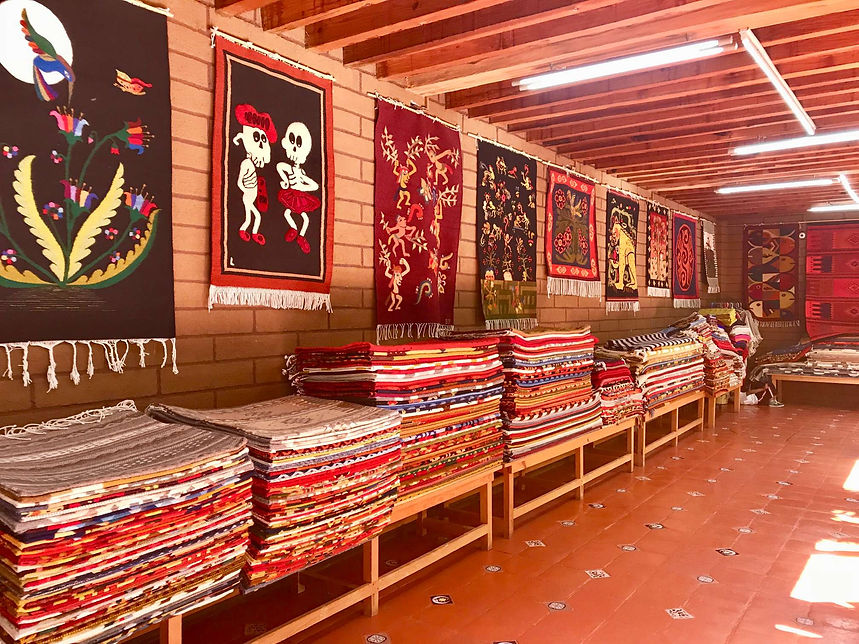
5 kilometres from the city, this Zapotec village has been producing handwoven rugs and textiles for over two thousand years. Visiting a family workshop and watching the weavers at their looms using natural dyes made from cochineal, indigo, and marigolds is a profound experience. Many weavers welcome visitors directly into their homes.
San Bartolo Coyotepec
The home of Oaxaca's famous black clay pottery, known as barro negro. Watch local artisans shape pieces by hand using techniques passed down through generations, with no wheel and no mould. The finished work, polished to a mirror-like sheen, is unlike any pottery you will find elsewhere.

Mitla
A lesser-known but extraordinary Zapotec archaeological site, Mitla is famous for its intricate geometric stonework — mosaics of cut stone assembled without mortar, covering the walls in endlessly repeating patterns. Far less visited than Monte Albán, and all the more intimate for it.

JACOBO & MARÍA ÁNGELES WORKSHOP
San Martín Tilcajete
Forty minutes south of Oaxaca in the village of San Martín Tilcajete, Jacobo and María Ángeles run what is widely considered the finest alebrije workshop in the state. Alebrijes - the vivid, fantastical carved wooden creatures that have become one of the most iconic symbols of Oaxacan folk art - are made here from start to finish: the copal wood is carved by hand into intricate animal forms, dried, and then painted with extraordinary precision using natural dyes derived from plants, minerals, and insects including cochineal.
Each piece can take weeks or months to complete, and no two are ever the same. Visiting the workshop is a genuinely moving experience - less a tour, more an introduction to a living artistic tradition and the extraordinary human skill behind it. If you have any interest in craft, design, or the culture of Oaxaca, this is not to be missed. Pieces are available to purchase directly from the family.

CENTRO DE LAS ARTES DE SAN AGUSTÍN
San Agustín Etla
Thirty minutes north of the city in the village of San Agustín Etla, a 19th-century textile factory has been transformed into one of the most beautiful cultural spaces in Mexico. Founded by Oaxacan artist Francisco Toledo, CaSa combines stunning industrial architecture - vast stone halls, wooden beams, natural light pouring through original factory windows - with a changing programme of contemporary art exhibitions, artist residencies, printmaking workshops, and community events. The building itself, set against the mountains of the Etla Valley with water channels and gardens running through the grounds, is reason enough to make the trip. For guests who love art, architecture, or simply beautiful spaces, this is one of the most rewarding half-days you can spend outside the city.

Temazcal
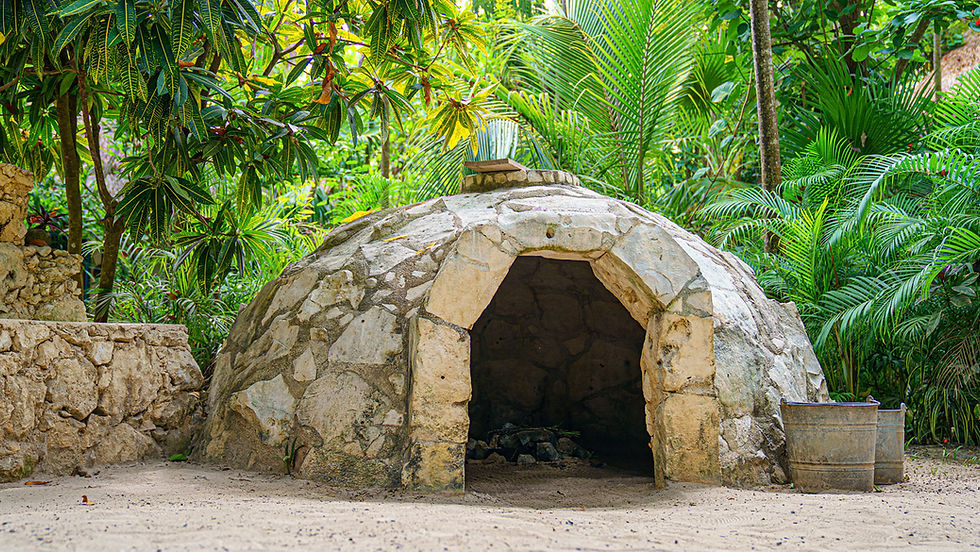
The Temazcal is an ancient sweat lodge ritual rooted in indigenous Mexican culture, a dome-shaped structure, built to represent the womb of Mother Earth, where heated volcanic stones are doused with water infused with medicinal herbs to create a therapeutic steam. In Oaxaca, the ritual honours the four elements - earth, water, air, and fire - drawing on the region's rich Zapotec heritage, is led by a temazcalero or healer who guides participants through the ceremony with chanting, herb bundles, and breathing techniques. The experience is said to represent rebirth — when a person steps out of a temazcal, they emerge renewed. It is intense, deeply personal, and unlike anything most guests will have experienced before. Sessions typically last one to two hours and are often followed by a massage. Gabriela and her team can arrange a private or group Temazcal experience in the city or in one of the surrounding villages, with trusted and experienced guides. Please note it is not recommended for those with high blood pressure, certain medical conditions, or during pregnancy — and arriving well-hydrated is essential.